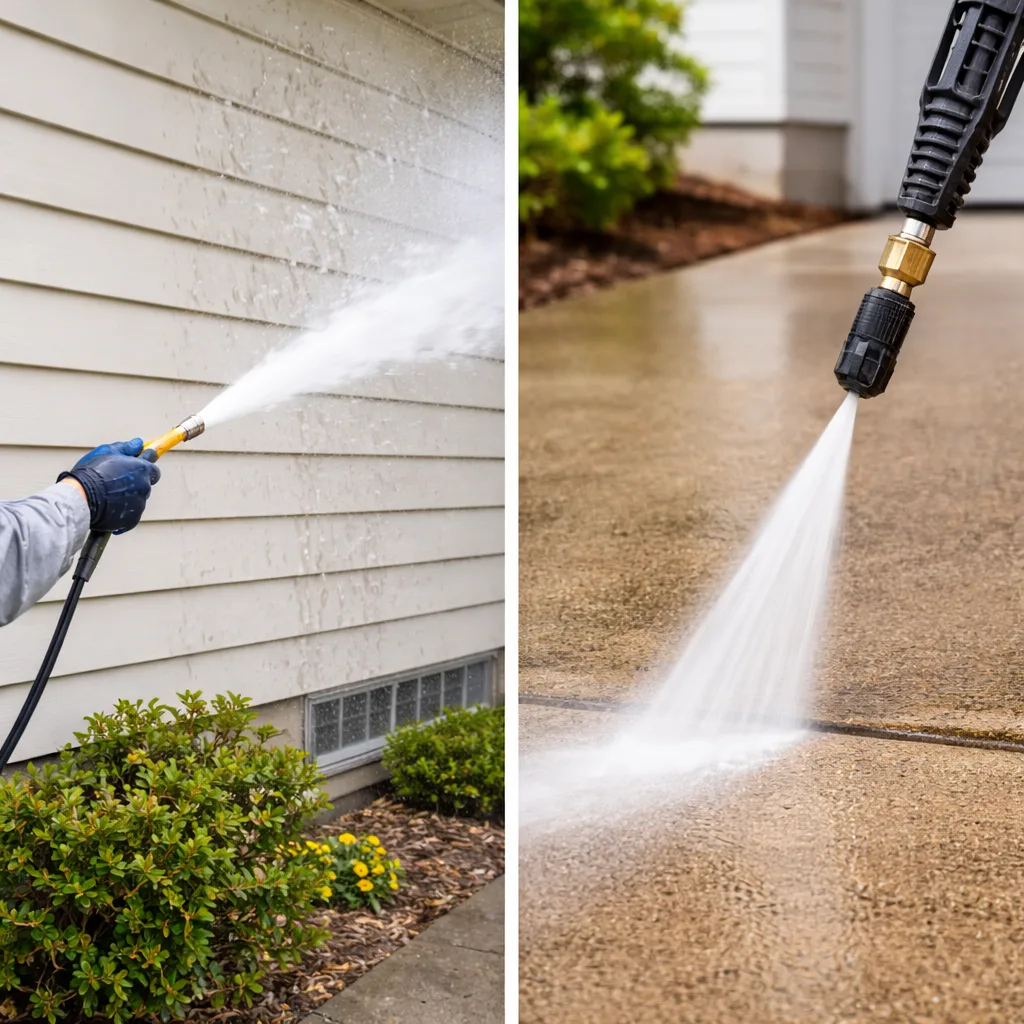
How Often Should You Power Wash Your Home in New Jersey?
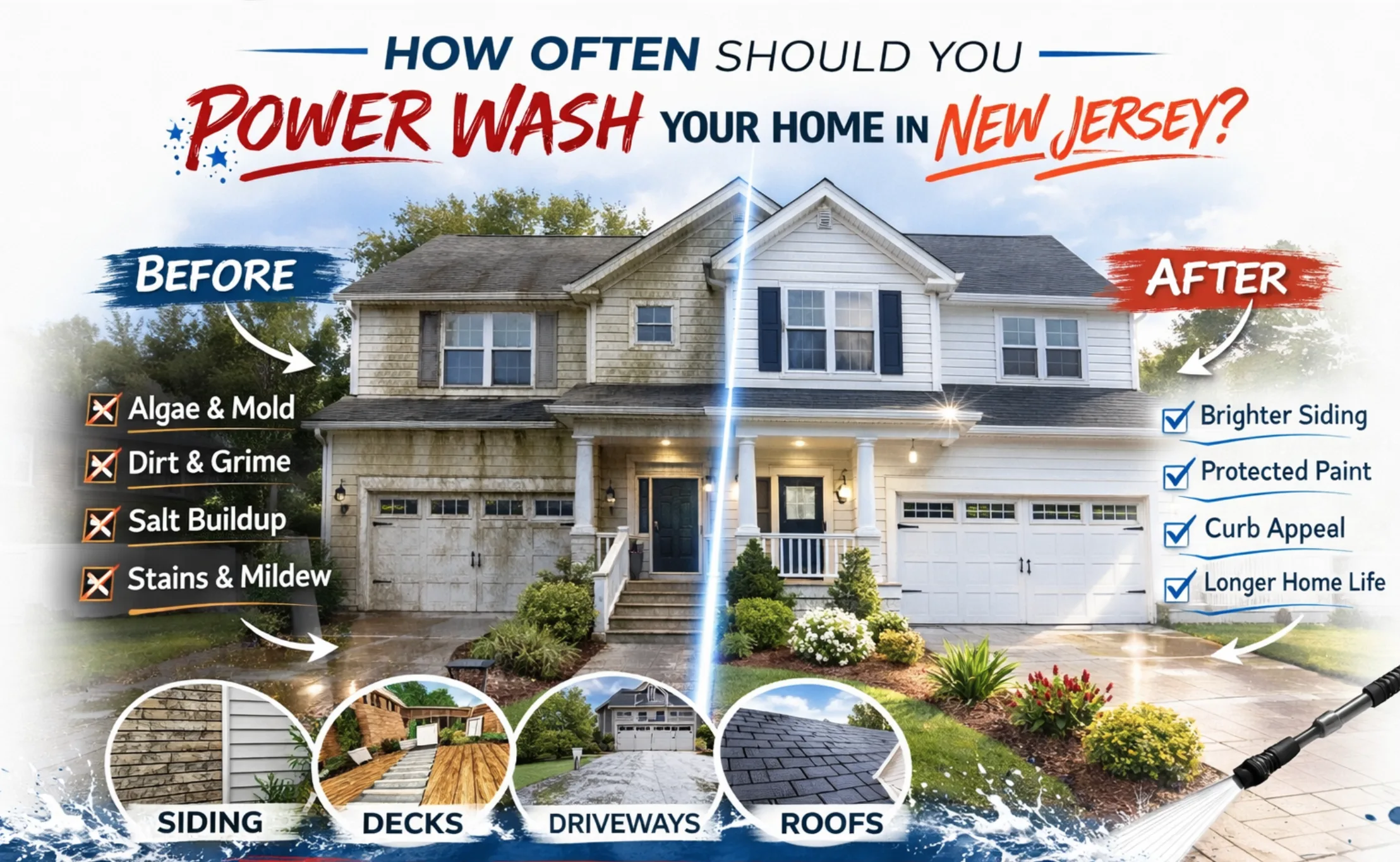
If you live in Ocean County or Monmouth County, you have probably noticed it.
One year your home looks bright and clean. The next year, faint green streaks appear. Dark spots start forming on the north side. Your driveway looks dull. The deck feels slightly slippery after rain.
That is not just dirt. That is New Jersey climate at work.
Power washing is not just about curb appeal. It is about protecting your home from long term moisture damage, algae growth, mold buildup, and premature paint failure.
So how often should you power wash your home in New Jersey?
The answer depends on location, exposure, materials, and surrounding environment.
Let’s break it down properly.
Why Homes in New Jersey Get Dirty Faster Than You Think
New Jersey has a unique combination of environmental factors:
• Coastal humidity in towns like Brick, Toms River, and Middletown
• Salt air exposure near the shore
• Heavy tree pollen in spring
• Warm humid summers
• Freeze thaw cycles in winter
• Dense tree coverage in neighborhoods like Howell and Jackson
Humidity plus shade equals algae growth.
Salt air plus moisture equals oxidation and surface wear.
Even homes that look “fine” from the street often have buildup starting at the siding seams and trim edges.
Power washing is preventative maintenance, not just cosmetic cleaning.
General Rule: How Often Should You Power Wash?
For most homes in Ocean and Monmouth County:
Vinyl or aluminum siding: Every 1 to 2 years
Brick homes: Every 2 years
Decks: Annually
Concrete driveways and patios: Every 1 to 2 years
Roof soft wash: Every 2 to 3 years
However, that timeline changes based on specific conditions.
Let’s get more precise.
If You Live Near the Water
Homes near the Jersey Shore experience:
• Salt air exposure
• Higher humidity levels
• Wind driven debris
• Increased mold growth
If you live in coastal towns like:
• Brick
• Bay Head
• Point Pleasant
• Middletown
• Sea Girt
You should consider washing siding every year.
Salt residue may not always be visible, but it accelerates surface deterioration and paint breakdown.
If Your Home Is Surrounded by Trees
Homes in wooded areas like Howell, Jackson, Manalapan, and parts of Freehold are prone to:
• Pollen buildup
• Moss growth
• Shade moisture retention
• Organic debris accumulation
Shaded siding stays wet longer after rain.
Moisture plus organic debris equals green algae streaking.
In these environments, annual washing is often recommended.
Signs It Is Time to Power Wash
Do not rely only on the calendar.
Look for these early indicators:
• Green streaks on siding
• Black spotting near gutters
• White chalky oxidation on vinyl
• Slippery deck boards
• Dark driveway stains
• Spider web buildup on trim
• Dirt bands under windows
If you see one of these, washing is overdue.
Waiting too long allows organic growth to penetrate deeper into surfaces.
The Cost of Waiting Too Long
Homeowners often delay power washing because the house does not look “that bad.”
But buildup does more than dull appearance.
It can cause:
• Paint adhesion failure
• Premature fading
• Wood rot in trim
• Surface etching
• Mold infiltration behind siding
• Increased repainting frequency
Exterior paint jobs can last years longer when surfaces are properly maintained.
Regular washing protects your larger investment.
Best Time of Year to Power Wash in New Jersey
Season matters.
Here is how timing breaks down:
Spring
Ideal time.
Removes winter salt residue and pollen buildup.
Prepares home for summer humidity.
Early Summer
Still effective.
Removes early algae growth.
Late Summer
Good before fall.
Helps remove accumulated grime.
Fall
Acceptable.
Good before winter moisture sets in.
Winter
Not recommended.
Cold temperatures prevent proper drying.
Risk of freeze damage.
Most homeowners schedule washing between April and September.
Annual vs Biannual Washing: Which Is Right for You?
Here is a simple framework.
You likely need annual washing if:
• You live within 5 miles of the coast
• Your home is heavily shaded
• You see green buildup within 12 months
• You have light colored siding
You may be fine with every 2 years if:
• Your home has full sun exposure
• You have minimal tree coverage
• You do not live near water
• You regularly rinse off surfaces
Even then, inspection each year is smart.
Soft Washing vs High Pressure: Why It Matters
Many homeowners assume power washing means blasting surfaces with high pressure.
That is not always correct.
For most NJ homes, especially vinyl siding, soft washing is safer.
Soft washing uses:
• Low pressure
• Cleaning solutions
• Mold neutralizers
• Controlled rinsing
High pressure can:
• Crack vinyl panels
• Force water behind siding
• Strip paint
• Damage caulk
• Void warranties
The method matters as much as frequency.
How Power Washing Extends Paint Life
If your home was recently painted, washing helps protect that investment.
Dirt and algae trap moisture.
Moisture causes paint to:
• Bubble
• Crack
• Peel
• Separate from substrate
Keeping surfaces clean reduces repaint frequency.
For homeowners in Ocean and Monmouth County, that can mean adding several years between exterior painting cycles.
Driveways and Concrete: Often Forgotten
Siding gets attention. Concrete gets ignored.
Concrete in NJ is exposed to:
• Oil drips
• Tire residue
• Winter salt
• Mildew
• Organic staining
Without washing, stains set deeper.
Power washing every 1 to 2 years helps prevent permanent discoloration.
It also improves traction and safety.
Decks: Why Annual Cleaning Is Important
Wood decks absorb moisture.
Algae growth makes surfaces slippery.
If you plan to stain or seal your deck, cleaning is mandatory.
Annual deck washing:
• Removes mold
• Opens wood grain
• Prepares surface for stain
• Extends wood lifespan
Skipping cleaning shortens deck life significantly.
What Happens If You Never Power Wash?
Long term neglect can lead to:
• Permanent staining
• Oxidation damage
• Surface erosion
• Mold infiltration
• Trim rot
• Higher repaint costs
Power washing is a low cost preventative measure compared to exterior repairs.
How to Create a Washing Maintenance Plan
Instead of reacting to buildup, create a schedule.
Example:
Year 1: Full siding wash
Year 2: Siding inspection and driveway wash
Year 3: Siding wash and deck cleaning
Year 4: Driveway and patio wash
Rotate as needed based on exposure.
Home maintenance is about consistency.
Does Power Washing Increase Home Value?
Yes.
Before listing, professional exterior cleaning can:
• Increase curb appeal
• Improve listing photos
• Signal maintenance
• Attract stronger offers
Real estate professionals often recommend exterior washing before showings.
It is one of the highest ROI prep steps available.
Frequently Asked Questions
Can power washing damage vinyl siding?
Yes if done improperly. High pressure can crack panels or force water underneath. Soft washing is usually safer.
How long does it take?
Most residential homes take several hours depending on size and buildup.
Will power washing remove mold completely?
Professional washing removes surface mold and neutralizes growth, but ongoing maintenance prevents regrowth.
Should I wash before painting?
Absolutely. Surface preparation is critical for paint adhesion.
Is yearly washing too much?
Not in coastal or wooded environments. Annual cleaning is often recommended in those conditions.
Final Answer: How Often Should You Power Wash in NJ?
For most homeowners in Ocean County and Monmouth County:
Every 1 to 2 years is ideal.
If you live near the water or in a shaded area, annual washing is smart preventative maintenance.
If your home is fully exposed to sun and has minimal buildup, every 2 years may be sufficient.
The key is inspection and consistency.
Your home’s exterior is constantly exposed to moisture, salt, pollen, and environmental buildup.
Routine power washing protects your investment, extends paint life, improves curb appeal, and prevents costly repairs.
When to Schedule Professional Power Washing
If you notice buildup, streaking, or dull surfaces, it may be time to schedule service.
Professional power washing ensures:
• Proper pressure control
• Surface specific cleaning methods
• Protection of landscaping
• Long term durability
If you are in Ocean County or Monmouth County and want a professional evaluation, Carfagno Professional Painting can help you determine the right maintenance schedule for your home.