7 Signs Your Home Needs Repainting in New Jersey
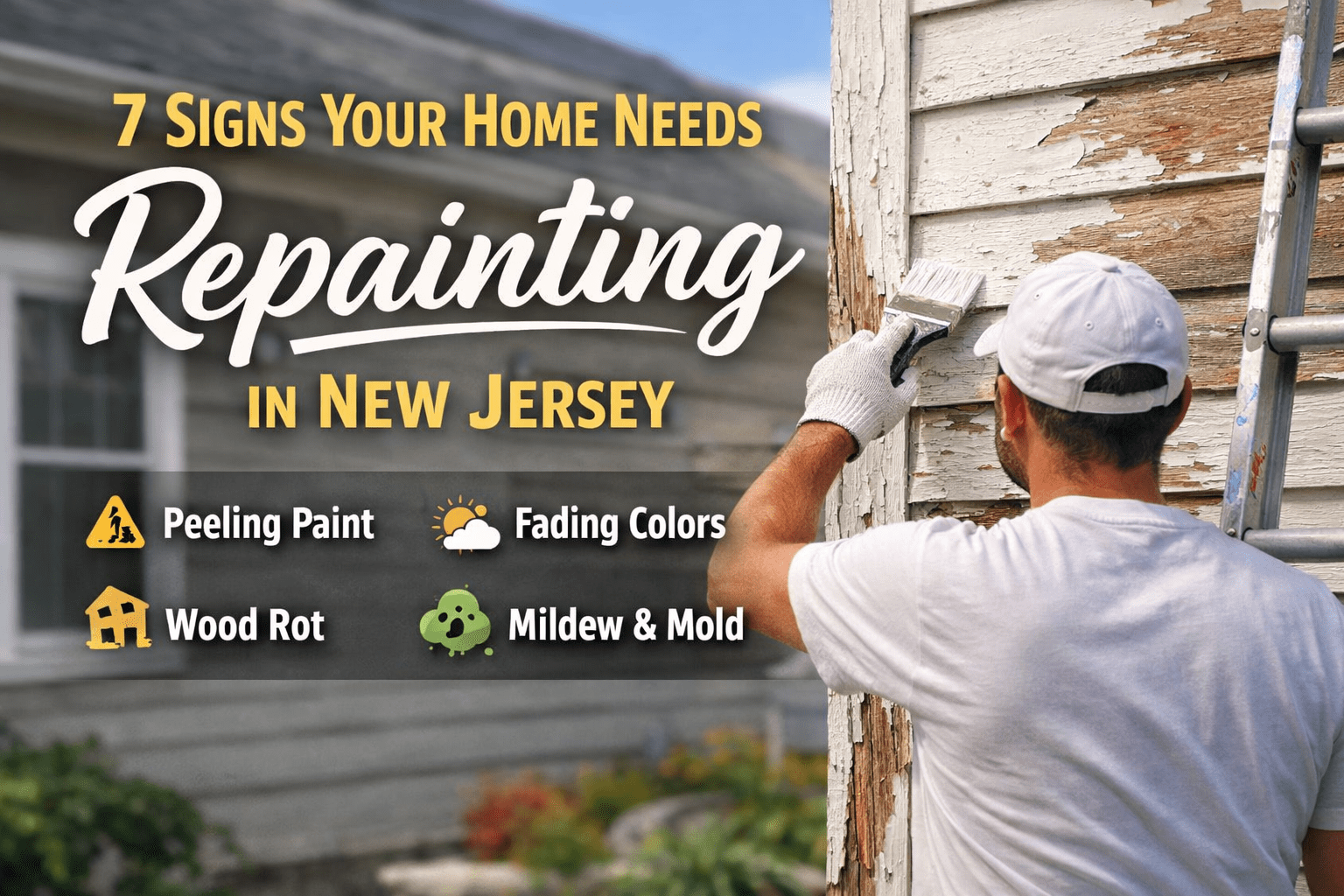
Exterior paint is not just cosmetic. It is your home’s first layer of protection against moisture, UV rays, salt air, temperature swings, and seasonal storms.
In Ocean and Monmouth County, those elements are intensified by coastal humidity and freeze-thaw cycles. When paint begins to fail, the underlying materials are exposed.
If you are unsure whether it is time to repaint, this guide will walk you through every warning sign, what it means, and what to do next.
Why Exterior Paint Fails Faster in New Jersey
New Jersey homes face a unique combination of stress factors:
- High summer humidity
- Salt exposure near the shore
- Winter freeze-thaw expansion
- Strong UV exposure
- Wind-driven rain
According to the National Weather Service climate data for coastal New Jersey:
https://www.weather.gov/phi/climate
Humidity and salt exposure significantly reduce the lifespan of exterior coatings compared to inland regions.
This is why two homes painted the same year can age very differently depending on location and prep quality.
How Long Should Exterior Paint Last?
Before diving into warning signs, here is a realistic lifespan chart for New Jersey homes.
Exterior Paint Lifespan by Surface Type
| Surface Type | Average Lifespan (Standard NJ) | Coastal NJ Lifespan |
|---|---|---|
| Wood Siding | 8–12 years | 6–10 years |
| Stucco | 10–15 years | 8–12 years |
| Fiber Cement | 10–15 years | 8–12 years |
| Aluminum | 5–10 years | 4–8 years |
| Brick (painted) | 12–20 years | 10–15 years |
Prep quality can increase or decrease these ranges significantly.
1. Peeling, Cracking, or Bubbling Paint
This is the most obvious warning sign.
When paint begins to peel or bubble, moisture has already breached the surface.
What causes it?
- Poor surface prep
- Painting over damp siding
- High humidity
- UV degradation
- Trapped moisture
In coastal towns like Point Pleasant, Spring Lake, and Long Branch, salt air accelerates paint breakdown.
Why it matters
Once peeling starts, exposed wood or siding absorbs water. That leads to:
- Rot
- Mold growth
- Structural damage
- Expensive repairs
If peeling appears in multiple areas, full repainting is usually necessary.
2. Fading or Uneven Color
Strong UV exposure in New Jersey summers breaks down pigment over time.
You may notice:
- Dull appearance
- Patchy discoloration
- Lighter areas on south-facing walls
Dark colors fade faster because they absorb more heat.
According to the EPA’s overview on UV radiation:
https://www.epa.gov/sunsafety
UV exposure breaks down materials at a molecular level. Exterior paint is no exception.
Fading is not just cosmetic. It signals thinning protection.
3. Chalking on the Surface
Chalking appears as a powdery residue when you rub your hand across siding.
It occurs when:
- The binder in paint deteriorates
- Sun exposure weakens the film
- Older paint formulations degrade
Quick Test
- Run your hand across the siding
- Look at your palm
- If it looks dusty, chalking is present
Mild chalking is normal. Heavy chalking means repainting is near.
4. Cracked or Failing Caulk
Exterior paint systems rely on sealed joints.
Inspect around:
- Windows
- Doors
- Trim
- Corners
- Siding seams
If caulk is:
- Shrinking
- Cracked
- Missing
- Brittle
Water intrusion is likely.
Water damage does not always show immediately. It can develop behind siding and become a major issue before you see interior signs.
Repainting often includes full re-caulking for protection.
5. Mold, Mildew, or Persistent Stains
New Jersey humidity creates ideal conditions for mildew.
Common areas include:
- North-facing walls
- Shaded sections
- Near landscaping
- Under rooflines
If stains return shortly after cleaning, paint protection may be failing.
Modern exterior coatings include mildew-resistant additives that significantly reduce recurrence.
The CDC outlines how mold grows in damp conditions:
https://www.cdc.gov/mold/default.htm
Persistent mildew is often a signal that the paint film has weakened.
6. Wood Rot or Soft Trim
Paint acts as a moisture barrier.
When paint fails, wood absorbs water. Over time this causes:
- Swelling
- Soft spots
- Cracking
- Splitting
Check:
- Fascia boards
- Window trim
- Door frames
- Corner boards
Press lightly with a screwdriver. If wood feels soft, rot may be present.
Rot should be repaired before repainting.
7. It Has Been 8 to 12 Years
Even if your home looks acceptable, age matters.
Here is a simplified timeline guide:
Exterior Paint Aging Chart
| Years Since Last Paint | Condition Expectation |
|---|---|
| 0–3 years | Like new |
| 4–6 years | Minor fading possible |
| 7–9 years | Early wear signs |
| 10+ years | Likely ready for repaint |
Coastal exposure shortens this timeline.
If you are unsure when your home was last painted, a professional evaluation helps determine current condition.
Interior Signs That Exterior Paint Is Failing
Sometimes exterior paint issues show inside first.
Watch for:
- Water stains near windows
- Drafts
- Peeling interior trim paint
- Musty smells
These may indicate exterior sealing failure.
Warning Signs Homeowners Often Miss
Many issues are subtle before they become obvious.
Look for:
- Hairline cracks along siding seams
- Slight warping of trim
- Increased energy bills due to air gaps
- Insects near exposed wood
Early repainting prevents major repair costs.
Seasonal Inspection Checklist for NJ Homeowners
Perform this check twice per year.
Spring Inspection
- Look for winter damage
- Check caulking
- Inspect for peeling
- Wash siding
Fall Inspection
- Check before freezing weather
- Inspect for moisture retention
- Look for mildew buildup
- Evaluate color fading
Regular inspections extend the lifespan of your paint system.
How New Jersey Weather Accelerates Paint Failure
New Jersey experiences:
- 40 to 50 inches of annual rainfall
- Significant humidity in summer
- Snow and freeze cycles in winter
Freeze-thaw cycles are particularly damaging.
When moisture enters small cracks:
- It freezes
- Expands
- Widens cracks
- Weakens paint adhesion
Over time, this process accelerates peeling.
Why Professional Prep Extends Lifespan
The difference between a 5-year paint job and a 12-year one usually comes down to prep.
Professional prep includes:
- Power washing
- Moisture testing
- Scraping loose paint
- Sanding edges smooth
- Spot priming bare areas
- Full caulking
Skipping prep traps problems under fresh paint.
When to Repaint vs Repair
Here is a simplified decision chart.
| Issue | Repair Only | Full Repaint |
|---|---|---|
| Small isolated chip | Yes | No |
| Multiple peeling areas | No | Yes |
| Heavy chalking | No | Yes |
| Faded color only | Sometimes | Often |
| Rot damage | Repair first | Then repaint |
If more than 25 percent of the surface shows failure, full repainting is usually recommended.
Benefits of Repainting at the Right Time
Repainting before major failure provides:
- Protection against rot
- Improved curb appeal
- Higher property value
- Energy efficiency improvements
- Reduced long-term maintenance costs
According to Remodeling Magazine’s Cost vs Value reports:
https://www.remodeling.hw.net/cost-vs-value/
Exterior improvements consistently rank high in return on investment.
FAQ
Can I wait another year if I only see minor peeling?
Possibly, but minor peeling can spread quickly after one harsh winter.
Does repainting increase resale value?
Yes. Fresh exterior paint improves first impressions and buyer confidence.
How long does exterior repainting take?
Most homes take 3 to 7 days depending on size and prep needs.
Final Thoughts for Ocean & Monmouth County Homeowners
If your home shows peeling, fading, chalking, mildew, or aging beyond 8 to 12 years, it is worth scheduling a professional inspection.
New Jersey weather is tough on exterior finishes. Catching paint failure early prevents larger structural damage and higher repair costs.
Exterior paint is not just about appearance. It is about protection.